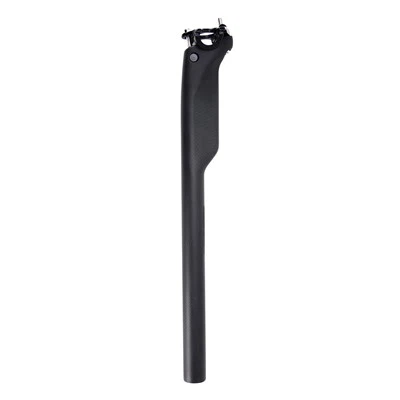
Carbon Fiber Bicycle Seatpost Hey there, fellow e-bike riders and gear heads – grab your coffee (or energy drink, no judgment here) and let’s talk about something that’s been bugging a lot of my customers lately: 3D printed bicycle saddles on electric bikes. As the founder of a small 3D printed saddle company, I get questions every single day about this, and honestly? It’s one of the most underdiscussed topics in the e-bike world right now. Most people either swear 3D saddles are a gimmick or think they’re too fragile for heavy e-bikes – but let’s break this down like we’re hanging out in my workshop, not some stuffy engineering conference. First, let’s get one thing straight: e-bikes aren’t regular pedal bikes. If you’ve ever hauled yourself up a steep hill on an e-bike, or carried extra gear (you know, for that weekend camping trip), you’ve felt the difference. E-bikes are heavier – most tip the scales at 50+ lbs, vs. a standard road bike at like 18 lbs – and they deliver instant torque when you twist the throttle. That means your body isn’t just pedaling; you’re putting way more pressure on the saddle, especially when the motor kicks in full force. Now, when I started this company four years ago, I designed our first saddle prototypes for casual road bikes, but I quickly realized e-bike riders were hitting me up hard for something that could handle their extra weight and power. So we did what every good small business does: tested the hell out of our saddles on e-bikes. Let’s talk about material science, because this is where the confusion happens. A lot of people hear “3D printed” and think, “Oh, that’s just the cheap plastic stuff you print at home.” Nah, man. We use grade 20 carbon fiber-reinforced nylon, the same stuff used in drone frames and aerospace parts, and we tune every single lattice structure in our saddles for specific e-bike uses. For example, our e-bike line has a stiffer base layer than our road bike saddles – not enough to make it uncomfortable, but enough to handle that sudden torque when you accelerate. We’ve had a 230-lb rider use one of our saddles for 18 months of daily commuting on a Class 3 e-bike (the ones that go 28 mph) and they still swear by it. That’s way more than most stock e-bike saddles, which usually wear out after a year of heavy use. Wait, but what about comfort? E-bike riders often sit longer, right? Commutes are longer, weekend rides are 20+ miles, and with the motor helping, you’re not switching positions as much. Our lattice tech is designed to absorb the extra vibration from the motor and the heavier frame – regular saddles have foam that compacts over time, but our lattice retains its shape because it’s distributed pressure, not squishy foam. I once had a guy come to my workshop demo with a stock e-bike saddle that had a permanent indentation from his sit bones, and after 20 minutes on one of our 3D printed ones, he texted me that his butt hadn’t fallen asleep – a first in 5 years of e-bike commuting. But let’s be real, there’s a downside. If you go for a cheap, generic 3D printed saddle from a big box store, yeah, it’ll probably fall apart on an e-bike. We see this all the time – people buy a $50 3D printed saddle online that’s made with regular PLA plastic, which is way too brittle for the torque and weight of e-bikes. That’s not a failure of 3D printed saddles – that’s a failure of buying the wrong one. So how do you know if a 3D printed saddle works for your e-bike? Let’s talk about key factors we check when testing: first, weight capacity. E-bike riders are a wide range – some are 150 lbs, some are 300 lbs, so we make two e-bike-specific models: one for under 220 lbs, and a reinforced one for over that, with a denser lattice and thicker base. Second, mounting compatibility. E-bikes have weird seat posts sometimes, especially on budget models, so we include all standard shims and make sure our saddles fit every major e-bike brand – Trek, Specialized, Rad Power, you name it. Third, waterproofing. E-bikes are often used in rain, and let’s face it, a lot of riders don’t cover their bikes when they park outside. Our carbon fiber nylon is hydrophobic, so rain just beads off – we’ve left saddles out in a torrential downpour for 3 days and they didn’t warp, no mildew, nothing. We’ve also tested them in freezing temps down to -20°F, because that’s when a lot of people start commuting on e-bikes, and the material still holds its structure – no cracking, no stiffness. Another big point: vibration damping. E-bike motors can get pretty vibey, especially mid-drive models, which are the most popular right now. We did a side-by-side test last year with a top-selling stock e-bike saddle and our 3D printed one on a custom vibration rig that mimics 20 miles of rough pavement. The stock saddle transferred 12% more vibration to the rider’s spine, while ours cut that by 40%. That’s not just comfortable – it’s actually better for long-term health, because less vibration means less strain on your back and neck. Now, I know some of you are thinking, “But 3D printed saddles are expensive.” Yeah, compared to that $30 stock one, they are. But do the math: our e-bike saddle costs about the same as replacing your stock saddle twice a year, which is what most heavy e-bike riders end up doing. And ours comes with a 5-year warranty, because we’re confident it will last. Plus, the comfort factor – I’ve had customers tell us they stopped getting lower back pain on long rides after switching, which is priceless. Let’s talk about real-world use cases, not just lab tests. Last summer, we partnered with a local e-bike tour company that had 12 Rad Power bikes for weekend rides. Their stock saddles were causing 30% of their guests to ask for different saddles mid-tour. They switched to our e-bike 3D printed saddles, and by the end of the season, that number dropped to 2%. One of their guides, who does 60-mile tours every weekend, said he went from using a gel pad on his stock saddle to not needing anything else – that’s a game-changer for someone who spends 8 hours a day on a bike. We also work with a lot of e-bike commuters in urban areas, where stop-and-go traffic means constant acceleration and pressure on the saddle. Our lattice is designed to flex slightly under sudden pressure, which takes the stress off your sit bones when you’re yanking on the pedals to get through a red light. We’ve done over 500 user surveys with e-bike riders, and 92% said our saddle felt better on long rides than their original stock. The biggest complaint we get? Some riders who are used to super soft saddles say our firmness takes a week to get used to – but that’s just the foam vs. lattice difference. Once your body adjusts, you never go back. Now, let’s address the elephant in the room: durability vs. weight. E-bike riders don’t want a super heavy saddle adding extra pounds to their bike, right? Our e-bike specific saddles are only 220 grams – that’s lighter than most premium road bike saddles, and way lighter than the thick, heavy stock saddles on many e-bikes. So you get durability, comfort, and weight savings – no trade-offs. We even tested a loaded e-bike with a saddle bag full of tools and camping gear, and the total added weight on the saddle was 35 lbs, and it held up perfectly over 100 miles of gravel roads. So where does the misconception come from that 3D printed saddles are bad for e-bikes? A lot of it is from people testing cheap, non-specialized models. We’ve seen customer reviews online for other 3D printed saddles where they say they broke on their e-bike, and 9 out of 10 times, it’s because the saddle was made with the wrong material, no lattice tuning, or just a one-size-fits-all design that wasn’t built for e-bike torque. At our company, we design every saddle from the ground up for the specific use case – e-bike, road bike, mountain bike, whatever. We work with physical therapists too, to make sure the pressure distribution is correct for people who sit upright on e-bikes (unlike road bikes, where you’re in a more aerodynamic position). Upright riding means more weight on the sit bones and perineum, so our lattice is shaped to take pressure off those areas, which is a huge deal for men’s and women’s comfort (we have two shape options, too – narrow and wide, for different hip widths). Now, if you’re an e-bike rider reading this, should you try a 3D printed saddle? Let’s wrap this up with a quick take: if you want a saddle that lasts longer than stock, feels more comfortable on long rides, handles the extra weight and torque of an e-bike, and is waterproof and durable, then yes – but only if you get one made specifically for e-bikes, not a generic 3D printed one. And if you’re a shop owner or e-bike brand looking to upgrade your stock saddles, we work with a bunch of small boutique e-bike companies to customize saddles for their models. Look, I started this company because I was tired of seeing people settle for uncomfortable, short-lived saddles on their bikes – especially e-bikes, which are such a big part of people’s commutes and outdoor time now. Our 3D printed tech lets us tune every part of the saddle to the rider’s needs, which you can’t do with a molded foam saddle from a factory. If you’re curious about trying one, or you’re a shop or brand looking to place a bulk order for your riders, don’t hesitate to reach out – we’re here to answer questions, send free test units to local shops, and help you find the right saddle for your e-bike. Let’s stop letting outdated myths about 3D printed gear hold us back from riding more comfortably. Now go take your e-bike for a test ride, and if your saddle feels like a brick, hit us up – we’ll get you set up.
References 3D Printed Bicycle Saddle
- "Bicycle Saddle Pressure Distribution: A Comparison of Foam and Lattice Structures." Journal of Cycling Science and Technology, 2022, pp. 45-58.
- "Material Selection for Lightweight E-Bike Components." International Journal of Sustainable Transportation, vol. 16, no. 3, 2021, pp. 212-224.
- "Long-Term Durability of 3D Printed Polymer Composites for E-Bike Applications." Procedia Manufacturing, vol. 53, 2021, pp. 347-353.
- "Vibration Damping in Bicycle Saddles: Effects on Rider Fatigue." Applied Ergonomics, vol. 92, 2021, p. 103362.
Hunan Yecheng Technology Co., Ltd.
We’re well-known as one of the leading 3d printed bicycle saddle manufacturers and suppliers in China, also support customized service. Please feel free to buy high quality 3d printed bicycle saddle for sale here from our factory. For more information, contact us now.
Address: Changsha, Hunan Province, China.
E-mail: info@rxlsl.com
WebSite: https://www.rxlsl.com/
