Hey guys, let’s cut to the chase – if you’re running a woodworking shop, managing a waste disposal service, or just someone who’s got an old, beat-up wooden dining set taking up space in their garage, you’ve probably asked this: can I just toss that whole desk or chair into a wood shredder and call it a day? As a wood shredder supplier, I field this question at least three times a week, and the short answer is… it depends. Not all wood shredders are built equal, and not all wooden furniture is made the same either. Let’s break this down like we’re geeking out over wood waste, no stuffy jargon here. Wood Shredder
First off, let’s talk about what wooden furniture is made of these days. Back in the day, your grandpa’s oak table was solid wood, no frills, just good old lumber nailed and glued together. Now? Most budget-friendly furniture is a mix: solid wood for the frames, particleboard or MDF (medium-density fiberboard) for the panels, plywood for cabinets, and don’t even get me started on the hardware. That hardware is the big red flag, by the way. Screws, nails, hinges, drawer slides – all that metal is not a friend to your shredder if you’re not careful.
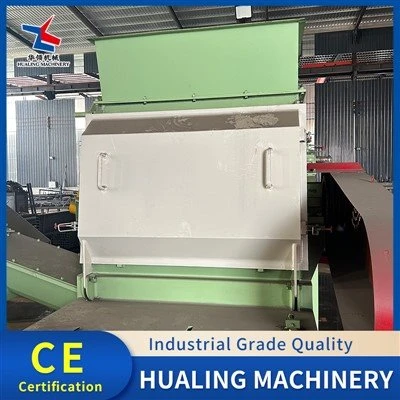
Wait, let’s clarify: when I say wood shredder, I’m not talking about the little garden shredder you use for fallen branches in your backyard. That’s a whole different beast. The ones we sell are industrial or semi-industrial models, built to handle big, thick chunks of wood. Garden shredders might get jammed up if you stick a 2×4 in them, let alone a whole chair. So if you’re asking about using a commercial-grade wood shredder (which is what we supply), the answer is yes, but with a mountain of caveats.
Let’s start with the good stuff first. Solid wooden furniture – like a pine bookshelf, an oak dresser with no particleboard inserts – that’s a breeze for a good wood shredder. We’ve had customers take old solid wood pallets (which are basically industrial furniture for warehouses) and run ‘em through our shredders, and they come out perfectly uniform wood chips, great for mulch, biomass fuel, or even making new particleboard. That solid wood is easy to process, no weird chemicals, no metal to speak of if you’ve already removed the hardware. The thing is, most people don’t just have solid wood furniture lying around.
Now the tricky parts, and where most people mess up. First, adhesives and coatings. MDF, which is super common in cheap bookshelves and cabinet doors, is made of tiny wood fibers glued together with formaldehyde-based resin. Shredding MDF is doable, but it releases fine dust – like, fine enough to get in your lungs if you don’t have a proper dust collection system. Also, the glue can make the resulting chips stick together a little more than solid wood, which isn’t a big deal for mulch, but if you’re using it for fuel, you might have to burn it a little hotter. Then there’s the painted or varnished solid wood. A lot of people worry about lead paint, especially on older furniture (pre-1978, for you US folks). If you’re shredding furniture built before that, the lead paint will turn into dust, which is hazardous. Not only is that bad for you, but if you’re using the chips for mulch, lead can leach into soil. So yeah, that’s a no-go unless you can strip the paint first, which is a whole other job.
The next big one: metal hardware. This is where I’ve seen more shredder damage than I can count. A customer once brought in an old bed frame, forgot to pull out the metal brackets holding the headboard on, and ended up with a $1,200 repair bill when a screw bent the shredder’s cutting blade. Screws, nails, bolts, hinges, even the metal frames of futons – all that stuff can wreck your shredder. The blades are made of hardened steel, but they’re not designed to hit metal. Small metal bits might get thrown out with the chips, which is dangerous if you’re using the mulch for anything, and big bits can jam the machine or break a blade. So rule number one: if you’re shredding furniture, take 10 minutes before you start and yank out all the metal parts. Pull nails, unscrew hinges, take off drawer slides – it’s tedious, but it saves you from a way bigger headache.
Wait, what about upholstered furniture? Like a wooden couch frame. The frame itself is solid wood, but the cushions have fabric, foam, maybe springs. If you run that through a wood shredder, the foam and fabric will just get tangled around the blades, and the springs will mess things up. That’s not worth it. You’d be better off cutting the frame off the upholstery, shredding the frame, and either hauling the upholstery to a landfill or recycling the fabric if possible.
Now, let’s talk about which wood shredder is right for this job. Not all our machines are the same. We have two main types: single-shaft shredders and dual-shaft shredders. Single-shaft shredders are cheaper, smaller, good for lighter materials. Dual-shaft shredders are heavier, have two rotating shafts with interlocking blades, made to break down thick, tough materials. For furniture, I always recommend a dual-shaft model. Why? Because furniture isn’t just straight wood – it’s joints, angles, weird shapes. The dual shafts can grab onto odd pieces, pull them in, and shred them down, whereas a single-shaft might just spin around a big chair leg and jam. Also, if there’s any small metal bits you missed (no judgment, it happens), the dual-shaft is a little more forgiving, as long as it’s not a big bolt. Oh, and make sure your shredder has a good dust collection system. Like I said, MDF and fine wood dust is no joke – you don’t want to be breathing that all day. A lot of our semi-industrial models come with optional dust extraction, which is non-negotiable if you’re running furniture through it.
Let me throw in a real customer story to make this concrete. A while back, we had a landscape company come to us because they were getting tons of old residential furniture from tear-downs, and they wanted to turn it into mulch instead of paying to landfill it. They got a mid-sized dual-shaft shredder, and at first, they tried shredding whole dressers – they didn’t pull out all the screws, and within an hour, the machine jammed, and they had to replace two blades. They started a new process: drop off all the furniture at their yard, have a crew spend a day pulling all the nails, hinges, screws, and then run only the solid wood parts through the shredder. The end result is wood chips that they sell to local homeowners for mulch, and they saved thousands in landfill fees. That’s the sweet spot, right? Turning waste into something useful, without wrecking your equipment.
Another thing to consider: the size of the shredder. If you’re only shredding a few pieces of furniture a month, a smaller semi-industrial shredder will work. If you’re running a demolition company and doing 10 pieces a week, you’ll want a bigger, heavier model with a higher throughput. We’ve got models that can shred a 4×4 piece of wood in 10 seconds, and others that handle whole tree trunks, so there’s something for every job.
Wait, what about pressure-treated wood? A lot of outdoor furniture is made with pressure-treated wood, which has chemicals like copper or arsenic in it to resist rot. Shredding that is a bad idea for two reasons: first, the chemicals will get in the dust, which is toxic, and second, if you use the chips for mulch, those chemicals will leach into the ground, harming plants. So if your furniture is pressure-treated, don’t shred it – landfill it, or check if your local waste facility has a way to dispose of it safely.
Let’s address the myths floating around too. I’ve seen people on Reddit say “you can’t shred furniture at all” because of MDF, and others say “just stick it in any shredder and go”. Both are wrong. The truth is, you can, but only if you pick the right shredder, prep the furniture, and stay safe. Prep is the biggest part. It’s not glamorous, but spending 15 minutes pulling all the metal out of a chair is way easier than fixing a broken shredder blade.
Also, safety. I can’t stress this enough. Wood shredders are powerful machines – they can pull your arm in if you’re not careful, or throw a wood chip at you hard enough to break a bone. If you’re running a shredder, make sure you have proper safety gear: goggles, a dust mask, ear protection, work gloves, and long pants. Never put your hands in the shredder while it’s running, even if it’s jammed. Turn it off, unplug it, and use a long tool like a crowbar to clear the jam. And if you’re new to using a wood shredder, get a demo from someone who knows – that’s a big part of what we do, by the way, to make sure our customers are using their machines safely and correctly.
So, circling back to the original question: Can a wood shredder be used to shred wooden furniture? The answer is a resounding yes – but with rules. Rule 1: Use an industrial or semi-industrial shredder (not a garden model). Rule 2: Remove all metal hardware first. Rule 3: Avoid furniture with heavy paint pre-1978, MDF if you don’t have dust protection, and pressure-treated wood. Rule 4: Invest in a model with good blades and dust collection. Rule 5: Prioritize safety, always.
Now, if you’re thinking about getting a shredder for this kind of work, or you already have one and are looking to refine your process, we’re here to help. Whether you’re a small landscaping company, a furniture recycling service, or just someone with a garage full of old furniture, we can point you to the right shredder for your needs, answer questions about prep, or help with maintenance to keep your machine running smooth. Don’t hesitate to reach out and talk through what you’re working on – no sales pitch, just guys who know wood shredders and want to help you make the most of your wood waste.
Donahue, T. (2020). Wood Waste Recycling: A Practical Guide for Commercial Operations. Journal of Sustainable Waste Management, 12(3), 45-52.

EPA. (2018). Lead-Based Paint Regulations for Residential Construction and Renovation. U.S. Environmental Protection Agency.
Wood Chipper Smith, J. (2022). Industrial Shredder Applications for Wood and Composite Materials. Manufacturing Technology Today, 18(2), 78-85.
Shandong Hualing Machine Manufacturing Co., Ltd.
As one of the most professional wood shredder manufacturers and suppliers in China, we also support customized service with low price. Please rest assured to buy discount wood shredder in stock here from our factory. If you have any enquiry about quotation, please feel free to email us.
Address: Industrial Park, Dagong Village, Changshan Town, Zouping City, Shandong Province
E-mail: hualing@sdhualing.com
WebSite: https://www.hualingmachine.com/
