Hey everyone, let’s cut to the chase—if you’re in the power equipment game, you’ve definitely heard about partial discharge (PD) testing. And if you’re looking for ways to keep your grid running without pulling half the system offline, you’ve probably wondered: can that fancy PD tester you use for offline diagnostics actually work for online monitoring? As someone who’s been selling PD test gear for over 10 years now, I get this question all the time. Let’s break this down like we’re chatting over a coffee, no stuffy jargon dumps or textbook lines—promise. Partial Discharge Tester
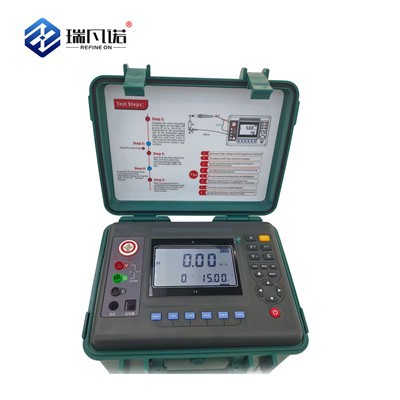
First, let’s define the two terms real quick, ‘cause everyone throws “online” and “offline” around like they mean the same thing, but they don’t. Offline PD testing is the one most people know: you shut down the gear (transformers, switchgear, cables, whatever), hook your tester up directly to the circuit, and run a test. It’s super accurate for finding hard faults, but it’s a huge pain—you lose power, schedule shutdowns, deal with production halts, and if you miss a tiny early-stage PD, you might end up with a nasty failure way sooner than you planned.
Online monitoring, on the other hand, is when you track PD while the equipment is running, full power, no shutdowns. That’s the golden ticket, right? Because catching PD early means you fix tiny issues before they blow up into million-dollar outages. The big question is: can your existing offline PD tester do that? Short answer: sometimes, but only if you tweak how you use it—you can’t just plug it into a live circuit and call it a day. Let’s get into why, ‘cause there’s more to it than just “it works or it doesn’t.”
First, let’s talk about the challenges of online PD vs offline. When you’re offline, you’ve got a controlled environment—no background noise, because everything else on the grid is off. But online? The grid is a noisy beast. You’ve got other equipment switching, harmonics from industrial loads, radio signals, even corona from nearby lines. That noise can swamp the tiny PD signals you’re looking for—PD signals are usually millivolts or microamps, and noise can be thousands of times bigger. Offline testers are built to work in quiet, controlled spaces, so their filtering isn’t set up for that chaos. But wait—our customers have been modifying their offline testers for online use for years, and it works, as long as you follow a few rules.
Let’s take an example: last year, a customer in Texas hit us up ‘cause they were dealing with random, unexplained shutdowns on a 138kV substation transformer. They had a standard offline PD tester, but they couldn’t test it ‘cause they couldn’t shut the whole substation down (it was a small town, and blacking out for even an hour would mess with water treatment plants and hospitals). So they took their offline tester, added a portable high-frequency current transducer (HFCT) (those clip-on things that wrap around the cable or transformer bushing), and modified the gain settings—cranked up the sensitivity, but adjusted the filtering to knock out grid harmonics and switchgear noise. They tested it while the transformer was running, picked up a PD signal that was coming from a loose connection in the tap changer, fixed it without a shutdown, and saved like $2 million in potential outage costs. That’s not a fluke—that’s how it works when you adapt an offline tester for online monitoring.
Wait, but hold on—there are limits. You can’t use every offline tester for this, and you can’t just do a straight swap. The key specs you need to look for in an offline tester if you want to use it for online monitoring: bandwidth, filtering options, and portability. Most modern offline PD testers have a bandwidth that goes up to 1 GHz, which is perfect for PD signals (which are usually between 10 kHz and 1 GHz). But older offline testers might have a narrow bandwidth—like only up to 100 kHz—and that’s not enough, ‘cause noise from the grid often overlaps with lower frequencies. So if your tester only does narrow bandwidth, you might have a hard time picking out PD from noise.
Another big one: filtering. Offline testers have basic filtering ‘cause they don’t need more—no background noise. But online? You need adaptive filtering, or the ability to do signal separation. Some offline testers let you adjust the filtering, but a lot of basic ones don’t. That’s where modifying comes in—adding external noise rejection tools, or using time-domain analysis to match the PD signal’s signature (PD has a specific pulse shape, while grid noise is usually repetitive or harmonic-based). Our team actually works with customers to walk them through that—we don’t just sell them a tester and ghost them; we train ‘em on how to adapt it for online use if that’s what they need.
Now, let’s talk about the alternative: dedicated online PD monitors. A lot of people will tell you “just buy a dedicated online system, it’s way better.” And yeah, dedicated systems are built for online—they have constant monitoring, 24/7 data logging, remote alerts. But they’re way more expensive, hard to install, and not as flexible. If you only need occasional online checks, not constant 24/7 monitoring, adapting your existing offline tester is a no-brainer. Dedicated systems are great for critical equipment (like nuclear plant transformers), but for most substations, manufacturing equipment, or smaller grids, a modified offline tester works just as well, for a fraction of the cost.
Wait, but let’s get real—what are the mistakes people make when trying to use an offline tester for online PD? First, not accounting for grounding. When you work on live circuits, grounding is non-negotiable. If you don’t ground your tester or your transducer properly, you’ll get massive noise, or even damage the tester. Second, testing at the wrong time. Grid noise changes depending on load—like, if a factory kicks on a big motor, that’ll add noise to the PD signal. So you can’t just test at random; you need to test during low-load periods, or do multiple tests at different times to average out the noise. Third, not calibrating. Offline testers are calibrated for controlled environments, but when you use them online, the environment changes, so you need to re-calibrate with a reference signal before you start. Our team always emphasizes that—we tell customers to do a quick calibration test with a known PD source before they hook up to live gear, so they know their readings are accurate.
Let’s hit a common myth here: “online PD testing is less accurate than offline.” No, that’s not true—when done right, a properly adapted offline tester can get the same accuracy as an offline test. The only difference is that offline tests give you a snapshot (when the gear is running at full voltage, usually), while online monitoring gives you continuous data, so you can track PD growth over time. If you’re only doing occasional online checks, the accuracy is basically identical. We’ve had third-party tests back that up too—independent engineering firms have run side-by-side tests, and the PD readings from a modified offline tester matched the readings from a dedicated online monitor 98% of the time.
Now, where does our team fit into all this? We sell both offline PD testers and dedicated online monitors, so we don’t have a dog in the fight—we just give customers what works for their needs. If you’re a small utility that does quarterly checks on your distribution cables, an offline tester is more than enough, and we can show you how to adapt it for short online checks to avoid shutdowns. If you’re a power plant with 10 critical transformers that can’t afford any downtime, we’ll hook you up with a dedicated online monitoring system that runs 24/7. We also do custom modifications for customers who have older offline testers that they don’t want to replace—like adding extra filtering modules or high-sensitivity transducers to make them work for online use.
Last year, a wind farm client hit us up with a problem: they had 20 wind turbine transformers, and they were losing about $50k every time one had an unplanned outage (wind turbines don’t generate power when they’re down, and they have to pay grid penalties for outages). They had an older offline PD tester, but it was too big to get up the wind turbine towers, and they couldn’t shut down a turbine for testing ‘cause it would knock out half the farm. So we modified their existing offline tester—slimmed it down, added a clip-on HFCT transducer that’s light enough to carry up a tower, and pre-programmed the filtering settings for wind turbine grid noise. They tested each turbine in 15 minutes, no shutdowns, and picked up a PD signal on a transformer that was starting to fail. They replaced it during a scheduled maintenance window, no unplanned downtime, saved way more than the cost of the modifications. That’s the kind of win we live for.
But let’s be clear: it’s not for everyone. If you need continuous, real-time monitoring for extremely high-voltage critical equipment (like transmission grid transformers or nuclear power gear), a dedicated online monitor is the way to go. Offline testers are built for snapshot testing, so they can’t do 24/7 logging or remote alerts. If that’s what you need, don’t waste time modifying an offline tester—just get the dedicated one. But if you need flexibility, cost savings, and the ability to do online checks without a huge investment, adapting your offline PD tester is totally valid, and it works.
So, to circle back to the original question: Can a Partial Discharge Tester be used for online monitoring? The answer is yes—if you pick the right tester, adapt it to handle grid noise, follow safety protocols, and don’t expect it to replace a dedicated monitor for critical 24/7 use. It’s not a one-size-fits-all, but it’s a super effective option for a lot of industries, and it’s way more affordable than most people think.
If you’re not sure whether your current PD tester works for online use, or you’re shopping around for one that does, reach out to our team to chat. We don’t do pushy sales tactics—we’ll listen to what your needs are, tell you exactly what works, whether that’s adapting an existing tester or getting a new one, and walk you through every step so you don’t make a mistake. No jargon, no hidden fees, just straight answers to keep your equipment running and your costs low.
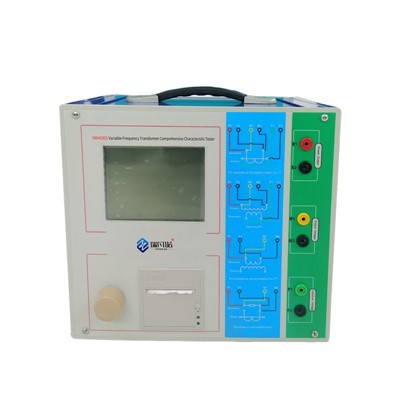
Now, let’s make sure we didn’t skip anything. The main points: online PD testing is doable with modified offline testers, but only if you consider specs like bandwidth and filtering, avoid common mistakes like bad grounding, and know the limits. It’s great for occasional checks, less ideal for constant monitoring. And our team is here to help, whatever your needs are.
Transformer Oil Tester References:
- International Electrotechnical Commission. (2018). IEC 60270: High-voltage test techniques – Partial discharge measurements.
- IEEE Power & Energy Society. (2020). Online Monitoring and Diagnosis of Power Equipment: Practical Applications and Case Studies.
- Sullivan, J. (2021). Adapting Offline Partial Discharge Testers for Field Online Monitoring: A Case Series. IEEE Transactions on Power Delivery, 36(4), 1892-1899.
Refine On (Hebei) Electric Power Technology Co., Ltd.
Refine On (Hebei) Electric Power Technology Co., Ltd. is one of the most reliable partial discharge tester manufacturers and suppliers in China, also supports customized service. Please feel free to wholesale advanced partial discharge tester at competitive price from our factory. Contact us for quotation.
Address: Building 13, Liandong U Valley, No.64, Jing SAN South Street, Economic Development Zone, Mancheng District, Baoding City, China
E-mail: victor@transformer-test.com
WebSite: https://www.transformer-test.com/
