If you’ve spent any time in the electrolytic copper foil supply chain, you know that the titanium anode isn’t just another component—it’s the backbone of consistent, high-quality foil production. As a supplier who’s worked with copper foil manufacturers for over a decade, I’ve seen firsthand how cutting corners on anode materials leads to uneven foil thickness, rough surface finishes, and costly downtime. Today, I want to pull back the curtain on what goes into making a reliable titanium anode for this exact application, because not all titanium anodes are created equal. Titanium Anode for Electrolytic Copper Foil
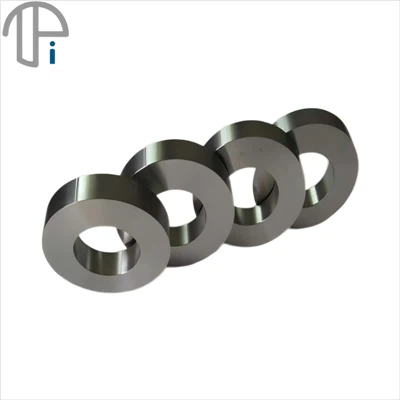
Let’s start with the base material, because that’s where every anode’s performance begins. Most people don’t realize that pure titanium itself isn’t always the right choice—wait, correction, it’s rarely the right choice for electrolytic copper foil. Wait, no, hold on: the core substrate is commercially pure (CP) titanium, but not just any CP grade. Grade 1 and Grade 2 titanium are the workhorses here because they strike the perfect balance of corrosion resistance, mechanical strength, and formability. If I use a lower grade titanium, it’s too soft and can deform under the constant electric current and acidic electrolyte used in copper foil production. A higher grade, like Grade 7 titanium, has palladium added for extra corrosion resistance, but that’s overkill for most standard copper foil lines and would only drive up costs for clients.
The substrate is just the start, though. The real magic of a titanium anode for electrolytic copper foil is in the coated layer—this is what makes it dimensionally stable, and it’s why we call these anodes DSA, or Dimensionally Stable Anodes. I’ve seen competitors skip proper coating prep, which leads to the coating peeling off after a few weeks of use. That’s a death sentence for a copper foil line, because peeling coating contaminates the electrolyte and ruins hundreds of square meters of foil. At my company, we spend extra time blasting the titanium substrate with fine alumina particles to create a rough, uniform surface, then cleaning it in a heated acid bath to remove any surface impurities. Only then do we apply the active coating.
Now, what’s in that active coating? It’s a combination of metal oxides, specifically mixed metal oxides (MMOs), that are tailored for the acidic copper sulfate electrolyte used in copper foil production. The main components are usually ruthenium oxide (RuO2) and iridium oxide (IrO2), with smaller amounts of tantalum oxide (Ta2O5) sometimes added to boost durability. Ruthenium oxide is great because it has low overpotential for oxygen evolution—meaning it efficiently transfers electrons during the electrolysis process, so less energy is wasted as heat. That’s a huge win for manufacturers looking to cut electricity costs. Iridium oxide, on the other hand, is what gives the coating its long-term stability. Without iridium, the coating would break down in a matter of months, especially when exposed to the high current densities common in modern copper foil lines.
Wait, some newer anodes are adding other metals to the mix, right? Like tin or cobalt? But I’ve tested those over the last few years, and while they might lower upfront material costs, they lead to faster coating degradation. Our clients, who run 24/7 production lines, can’t afford to shut down every three months to replace anodes. So we stick with the proven Ru-Ir-Ta oxide mix, adjusted in precise ratios based on the client’s specific line parameters—like current density, electrolyte temperature, and the type of copper foil they’re making (whether it’s standard electrodeposited foil, high-voltage foil, or ultra-thin lithium-ion battery foil).
Another thing that’s often overlooked is the edge treatment of the anode. When I first started in this industry, I didn’t pay much attention to it, until a client called us in panic because their foil had thick, uneven edges that were unfit for use. It turned out their previous anode had sharp, unprocessed edges that caused localized current spikes. To fix that, we now round the edges of every titanium anode we supply and add a thin extra coating layer along the edges. That way, current is distributed uniformly across the entire anode surface, which translates to uniform foil thickness—something that’s non-negotiable for applications like lithium-ion batteries, where even a 1-micron thickness variation can affect cell performance.
Let me also talk about why pure titanium anodes aren’t suitable without the MMO coating. If you tried to use a bare titanium anode in electrolytic copper foil, the titanium itself would react with the acidic electrolyte and dissolve, contaminating the copper foil with titanium ions. That contamination would make the foil brittle, cause pinholes, and ruin its conductivity. I once worked with a small manufacturer who tried to save money by skipping the coating, and within a month, their entire batch of 10,000 square meters of foil was scrap. They had to shut down their line for a week to clean all the tanks, which cost them way more than the money they saved on cheap anodes. So the coating isn’t just a performance add-on—it’s a barrier between the titanium substrate and the electrolyte, preventing contamination and extending the anode’s life.
What about special cases? Like when a manufacturer is producing ultra-thin copper foil for flexible electronics, which requires extremely precise current control. For those clients, we adjust the coating ratio to have a bit more iridium oxide, because iridium has a more stable potential over time, so the current density stays consistent even as the anode is used. We also use a thinner, more uniform coating layer for those anodes, which helps with even current distribution across the tiny surface area needed for ultra-thin foil.
I always get asked about the longevity of these anodes. From our testing and client data, a properly manufactured titanium DSA anode for electrolytic copper foil lasts between 2 and 5 years, depending on the operating conditions. That’s way longer than the old lead anodes that manufacturers used to use, which only lasted 6 to 12 months and were also toxic. Lead anodes are basically obsolete now, because they’re heavy, corrode easily, and pose environmental risks. Titanium DSA anodes are not only more durable, but they’re also recyclable—we take back old anodes from some clients to process and reuse the titanium substrate, which is a big plus for companies focused on sustainability.
Wait, let’s get back to the materials, because that’s what this is all about. To recap, the two key material components are: first, the CP titanium Grade 1 or Grade 2 substrate, chosen for its balance of corrosion resistance, strength, and workability. Second, the MMO active coating, composed of ruthenium oxide, iridium oxide, and tantalum oxide in precise ratios, applied to a properly prepared surface to ensure adhesion and uniform performance. Any variation in these materials—like using Grade 3 titanium that’s not as corrosion-resistant, or cutting back on iridium to lower costs—will result in an anode that underperforms.
I’ve spent years refining our manufacturing process, because I’ve seen too many subpar anodes from overseas suppliers that cause our clients problems. For example, a couple years ago, a big lithium-ion battery foil manufacturer brought us anodes they’d bought from a new supplier. The coating peeled off in less than 6 months, their foil had random defects, and they had to spend hundreds of thousands of dollars reworking their process. We replaced those anodes with our standard Grade 2 titanium substrate and our custom MMO coating, and their downtime dropped by 80% within three months. That’s the difference that good materials make.
Now, if you’re a copper foil manufacturer reading this, chances are you’re always looking for ways to improve yield, cut energy costs, and reduce downtime. The titanium anode is one of the most critical parts of your electrolytic line, and choosing the right materials isn’t just a technical detail—it’s a business decision. A high-quality anode might cost a bit more upfront, but the savings from less scrap, lower energy use, and fewer shutdowns add up quickly.
If you’re tired of dealing with anodes that fail too soon, cause foil defects, or contaminate your electrolyte, I’d encourage you to reach out to our team. We can work with you to test our anodes in your own line, adjust the material ratios to match your specific operating conditions, and provide the support you need to get the most out of your copper foil production. Whether you’re producing standard roll copper foil or ultra-thin battery-grade foil, our titanium anodes are designed to deliver consistent, reliable performance for years.
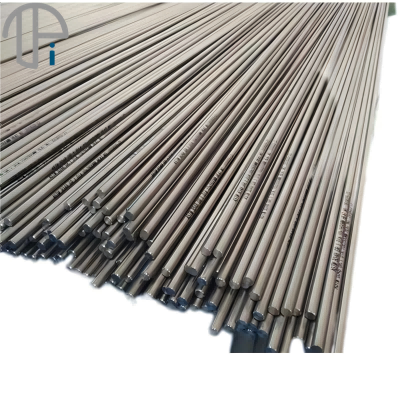
Titanium Wire At the end of the day, this is what I love about working in this industry: it’s not just about selling parts. It’s about understanding what goes into every component that makes a product work, and standing behind the quality of those components. I’ve built my business on that philosophy, and I’ve got a long list of clients who’ve stayed with us for years because they know our anodes are made with the right materials, the right processes, and a focus on their success. If you’re ready to upgrade your titanium anodes or just have questions about materials that work best for your line, don’t hesitate to connect with our team for a no-obligation consultation.
References
- Walsh, F. C. (2015). A First Course in Electrochemical Engineering. The Electrochemical Consultancy.
- Drazic, D. M. (Ed.). (2002). Modern Aspects of Electrochemistry. Springer.
- Tian, J., et al. (2019). "Dimensionally Stable Anodes for Electrochemical Metal Winning: A Review." Journal of Applied Electrochemistry, 49(12), 1167-1189.
- Lee, S., et al. (2021). "Materials and Performance of Titanium-Based Dimensionally Stable Anodes for Electrolytic Copper Foil Production." Journal of Power Sources, 498, 229987.
- ASTM International. (2020). Standard Specification for Titanium and Titanium Alloy Strip, Sheet, and Plate (Specification B265-20). ASTM International.
Baoji Top Titanium Industry Co., Ltd.
As one of the most professional titanium anode for electrolytic copper foil manufacturers and suppliers in China, we’re featured by quality products and good price. Please rest assured to buy bulk titanium anode for electrolytic copper foil in stock here and get quotation from our factory. Customized orders are welcome.
Address: No. 2, South Section Of Phoenix 2nd Road,High-Tech Zone, Baoji,Shaanxi, China (Mainland)
E-mail: sales@bjtopti.com
WebSite: https://www.china-topti.com/
