Hey there! I’m a supplier of the 60 Series Battery, and today I wanna talk about one of the most frequently asked questions: What is the maximum charge voltage of the 60 Series Battery? 60 Series Battery

First off, let’s get into why this question is so important. The maximum charge voltage is a critical parameter for any battery. It determines how much energy you can safely store in the battery without causing damage. If you charge a battery beyond its maximum charge voltage, it can lead to a whole bunch of problems, like overheating, reduced battery life, and in some extreme cases, even safety hazards.
So, for the 60 Series Battery, the maximum charge voltage varies depending on the specific type of battery chemistry. Most of the 60 Series Batteries we supply are lithium – ion batteries. Lithium – ion batteries are known for their high energy density, long cycle life, and relatively low self – discharge rate.
For a typical lithium – ion 60 Series Battery, the maximum charge voltage per cell is around 4.2 volts. But here’s the thing, the 60 Series Battery usually consists of multiple cells connected in series. For example, if the battery has 10 cells connected in series, the maximum charge voltage of the whole battery would be 4.2 volts per cell times 10 cells, which equals 42 volts.
However, it’s not always that straightforward. Some advanced lithium – ion chemistries, like lithium – iron – phosphate (LiFePO4), have a different maximum charge voltage per cell. For LiFePO4 cells, the maximum charge voltage per cell is typically around 3.65 volts. So, if you have a 60 Series Battery made up of LiFePO4 cells, say with 12 cells in series, the maximum charge voltage of the battery would be 3.65 volts per cell times 12 cells, which is 43.8 volts.
It’s really crucial to know the exact battery chemistry when determining the maximum charge voltage. That’s why we always provide detailed technical specifications for each of our 60 Series Batteries. These specs include information about the battery chemistry, the number of cells, and of course, the maximum charge voltage.
Now, let’s talk about how this maximum charge voltage affects the charging process. When you’re charging a 60 Series Battery, you need to use a charger that’s specifically designed for that battery type. A good charger will automatically stop charging when the battery reaches its maximum charge voltage. This is called "constant – voltage charging."
During the initial stage of charging, the charger supplies a relatively high current to quickly charge the battery. As the battery voltage approaches the maximum charge voltage, the charger reduces the charging current to prevent overcharging. This two – stage charging process helps to ensure the safety and longevity of the battery.
But what if you use the wrong charger? Well, if the charger supplies a voltage higher than the maximum charge voltage of the battery, it can cause the battery to overheat. Overheating can lead to the breakdown of the battery’s internal components, which will shorten the battery’s lifespan. In some cases, it can even cause the battery to catch fire or explode, although this is a rare occurrence.
On the other hand, if the charger supplies a voltage lower than the maximum charge voltage, the battery won’t be fully charged. This means you won’t get the full capacity out of the battery, and you’ll have to recharge it more frequently.
We’ve seen a lot of customers who are confused about the charging process. Some of them try to use a generic charger, thinking it’ll work for all types of batteries. But that’s a big no – no. You always need to use a charger that’s compatible with the specific 60 Series Battery you have.
Another thing to keep in mind is that the maximum charge voltage can also be affected by factors like temperature. In general, as the temperature increases, the maximum charge voltage should be slightly reduced to prevent overcharging. For example, if the battery is being charged in a hot environment, say above 40 degrees Celsius, you might need to lower the maximum charge voltage by a small amount.
We’ve done a lot of testing in our lab to determine the optimal charging parameters for different temperature conditions. Based on our research, we can provide our customers with guidelines on how to adjust the charging voltage according to the temperature.
So, to sum it up, the maximum charge voltage of the 60 Series Battery depends on the battery chemistry and the number of cells in the battery. For lithium – ion cells, it’s usually 4.2 volts per cell, and for LiFePO4 cells, it’s around 3.65 volts per cell. You need to use a compatible charger and be aware of how temperature can affect the charging process.
If you’re in the market for a 60 Series Battery, or if you have any questions about the maximum charge voltage or the charging process, don’t hesitate to reach out to us. We’re here to help you make the right choice and ensure that you get the most out of your battery. Whether you’re using the battery for an electric vehicle, a solar energy storage system, or any other application, we’ve got the expertise to provide you with the best solution.
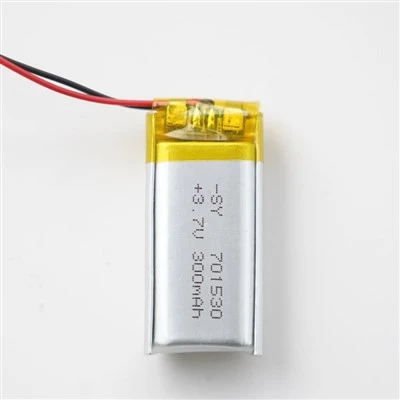
Let’s start a conversation and see how we can work together to meet your battery needs. We’re confident that our 60 Series Batteries will exceed your expectations in terms of performance, safety, and longevity.
40 Series Battery References:
- Battery University: A comprehensive resource for battery knowledge and research.
- Journal of Power Sources: A leading academic journal in the field of battery technology.
Hubei Shuoyue Electronics Technology Co., Ltd.
As one of the most professional 60 series battery manufacturers and suppliers in China, we also support custom service. Please feel free to wholesale bulk cheap 60 series battery from our factory. For price consultation, contact us.
Address: Hubei Shuoyue Industrial Park Management Co., Ltd., No. 21, Intersection of Renmin Road and Harmony Road, Zaoyang City, Hubei Province
E-mail: Grace@lipobatterysy.com
WebSite: https://www.hbsy-battery.com/
